
What is Amatsu Therapy?
What is Amatsu?
Amatsu is a soft tissue therapy that has its roots in ancient Eastern healing arts. It blends these traditional healing philosophies, massage and the movement principles of the martial arts (notably bujinkan) with modern western techniques and research.
It is a whole-body treatment that works with the soft tissues (e.g. muscles, tendons, ligaments, fascia) to help re-balance the skeletal complex. (e.g. spine, joints, cranium). With its global nature it can also help energetically: i.e. The body’s systems and meridian circuits.
It was bought to the UK by 3 western osteopaths in the early 90’s where the principles were reinforced with thorough assessment and correction techniques. It offers you a dynamic, remedial treatment which can be used for most muscular-skeletal problems; for correction, pain relief and rehabilitation.
Amatsu brings you back into balance
Each session is termed a ‘balance’. It evaluates the whole-body structure aiming not just to relieve pain, but also to bring about equilibrium. It is designed to help restore your natural movement patterns which may have been challenged by lifestyle, postural habits, trauma or illness. Improvement in these patterns can reduce pain, improve joint function and movement and promote a general sense of wellness.
Techniques used include soft tissue mobilisation, myofascial release, gentle joint realignment, visceral (organ) management and cranial to sacral balancing. Notably practitioners consider the muscle-organ-vertebra associations within your body and consider which may be having the principle impact on your condition.
Amatsu observes the principles that the body is a whole tensegrous structure with the fascia or connective tissue forming a continuous 3-D matrix throughout, extending from head to toe. This explains the fact that a correction at one end of the body may have an effect at a distal point elsewhere. In scientific terms the concept of ‘Biotensegrity’ offers the best explanation of this approach.
Treatment
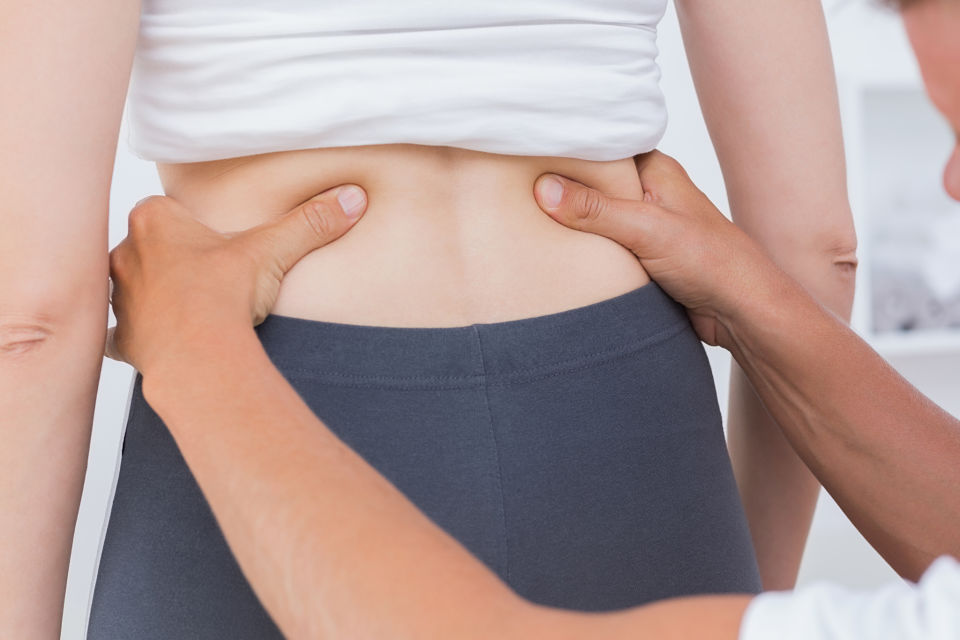
At the first session a detailed medical history is taken and your practitioner will consider any background factors which may also be influencing your condition.
Assessment is carried out using observation, kinesiological muscle testing, palpation and orthopaedic tests. Spinal dynamics and soft tissue tensions, including those around the organs, to build up a very complete picture of what may be the root causes of issues. Your body can then be encouraged back into a position where it can begin to move more freely and repair. Real improvement can be seen in one session with clients often reporting they feel more ‘aligned’ and ‘balanced’. However, to stabilise good patterns, a series of sessions is recommended, depending on the complexity of your condition.
After experiencing the thorough nature of Amatsu many people choose to come for regular balances – a physical M.O.T. – to encourage good posture and an ongoing reduction in pain and stiffness. Other people return when they feel the need.
The Amatsu process will help you understand your own body, its strengths and weaknesses and how you can maintain your own balance away from clinic.
Techniques in more depth
Amatsu involves the following Japanese elements which, in practise, are blended throughout the treatment.
Anma: is one of the oldest forms of massage, originating in China over 5000 years ago. Over the years Anma has influenced other methods such as Shiatsu, Tuina and Swedish massage. Anma uses techniques to stimulate key points (Tsubo) on the surface of the skin to release muscular tension and promote the body’s natural healing and energy.
Seitai: means to ‘correct the body’. It focuses on the head, hara (spine/pelvis) and the feet to bring about symmetry and paralateral movement. Seitai is the aspect of Amatsu which most closely resembles Western osteopathy but is gentler in nature and uses no high-velocity spinal manipulation.
Shindenjutsu: looks at pulls and tensions around organs of the body. Old strains here, possibly after trauma or operations, can lock physical tensions for many years.
Godai: A fundamental principle of Amatsu is known as the ‘Godai’; the 5 major forces that interact together to affect our health – physical, electrical, chemical, emotional and environmental.
An Amatsu practitioner will consider all these factors as she works.
A brief history
“Raise the spirit of the person and you will bring out the wellness”, Dr Masaaki
The principles of Amatsu originated from the Ancient school of Hi Chi Bu Ku Gos, translated as ‘The school of the opening flower’, a school of physical and breathing techniques.
The Tatara or Amatsu scrolls are a collaboration of martial arts, medicine, and philosophy.
Traditionally this knowledge was a skill only shared with a handful of people in each generation and passed down from master to student.
The present head of this tradition is Dr Masaaki Hatsumi (PHD) of Noda city, Japan. He is the founder and grandmaster of the bujinkan dojo. In the late 1980’s Hatsumi broke with tradition to share his knowledge with 3 western osteopaths. They completed extensive studies with him and combined it with their western experience to establish the first training schools in the UK in the early 1990’s.
For Further Information
www.amatsutherapyintl.com
www.amatsu.info
www.amatsutrainingschool.com